
- Availability & Price
- Search SKU
Filter by attributes
- Adjustment Mechanism
- Flow Rate
- Maximum Inlet Pressure Rating
- Pressure Control Range
- Seal Material
Filter by manufacturer
Direct Acting Pressure Reducing Relieving Valves
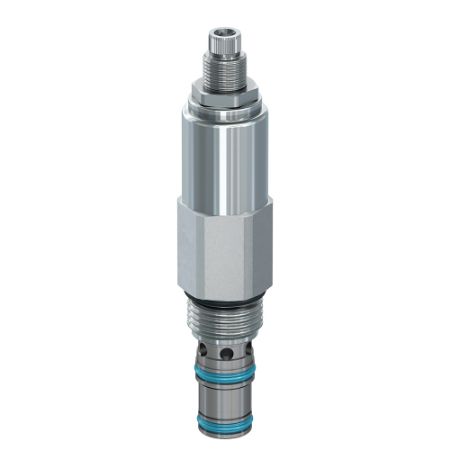
*PRODUCT IMAGE IS REPRESENTATIVE PROVIDED BY THE MANUFACTURER. DO NOT MAKE BUYING DECISIONS SOLEY BASED ON THE IMAGE. PLEASE VERIFY SPECIFICATIONS MEET YOUR REQUIREMENTS.
Parker's selection of direct acting reducing & relieving valves provide superior pressure control in applications where specific regulated and relief pressures are needed for precise operation on functions that require regulated pressures up to 420 bar (6000 psi) and flows up to 56 lpm (13 gpm). Parker's direct acting reducing & relieving valves are designed with several pressure ranges in order to give a higher degree of control with a variety of adjustment style options available. The wide array of options and settings make these valves ideal for sensitive applications such as up or downforce, clamping, or braking on various types of machinery within the mobile and industrial markets.
Markets:
• Agriculture
• Construction Equipment
• Industrial
• Miscellaneous Manufacturing
• Miscellaneous Mobile
Features/Benefits:
• Multiple pressure ranges available for more accurate pressure control
• Adjustable and tamperproof versions available
• High flow capacity
• All external parts zinc plated
Applications:
• Brakes
• Clamps
• Suspension systems
• Up/down-force systems
Additional Technical Insight:
Direct Acting Reducing/Relieving valves are applied in a circuit in order to reduce system pressure to the setting of valve to limit the pressure available to a specific branch of a hydraulic circuit. The direct acting function of the normally open valve allows the spool to operate directly against a control spring that is set using the valves internal adjustment setting. As hydraulic pressure is applied to the valve inlet, the spool will shift closed against the spring to limit the pressure that is available to the regulated port to the control setting. The valve will also function as a relief valve to the regulated port in the event of a rise in downstream pressure, protecting the regulated branch of the circuit from pressure spikes. Direct acting reducing/relieving valves are intended or intermittent duty applications with lower duty cycles that will not stress the mechanical operation of the valve. For best performance in the direct acting reducing/relieving valve, the inlet pressure setting should not exceed 1000 PSI (69 Bar) above the reducing valve setting, as high pressure differential could result in instability in the direct acting product. For continuous duty applications or applications where a high differential is required, the pilot operated version of this product should be considered as an alternative solution.
Typical applications are in mobile & industrial equipment, where a branch of the system is intended to operate at a lower setting than high system pressure. Hydraulic functions such as brake circuits, clamping or clutch circuits, suspension systems, street sweepers, or seeding and planting rows in agricultural equipment are common applications for these products.
Read More...Markets:
• Agriculture
• Construction Equipment
• Industrial
• Miscellaneous Manufacturing
• Miscellaneous Mobile
Features/Benefits:
• Multiple pressure ranges available for more accurate pressure control
• Adjustable and tamperproof versions available
• High flow capacity
• All external parts zinc plated
Applications:
• Brakes
• Clamps
• Suspension systems
• Up/down-force systems
Additional Technical Insight:
Direct Acting Reducing/Relieving valves are applied in a circuit in order to reduce system pressure to the setting of valve to limit the pressure available to a specific branch of a hydraulic circuit. The direct acting function of the normally open valve allows the spool to operate directly against a control spring that is set using the valves internal adjustment setting. As hydraulic pressure is applied to the valve inlet, the spool will shift closed against the spring to limit the pressure that is available to the regulated port to the control setting. The valve will also function as a relief valve to the regulated port in the event of a rise in downstream pressure, protecting the regulated branch of the circuit from pressure spikes. Direct acting reducing/relieving valves are intended or intermittent duty applications with lower duty cycles that will not stress the mechanical operation of the valve. For best performance in the direct acting reducing/relieving valve, the inlet pressure setting should not exceed 1000 PSI (69 Bar) above the reducing valve setting, as high pressure differential could result in instability in the direct acting product. For continuous duty applications or applications where a high differential is required, the pilot operated version of this product should be considered as an alternative solution.
Typical applications are in mobile & industrial equipment, where a branch of the system is intended to operate at a lower setting than high system pressure. Hydraulic functions such as brake circuits, clamping or clutch circuits, suspension systems, street sweepers, or seeding and planting rows in agricultural equipment are common applications for these products.
| Action | Part No. | Availability | Partner Available | Price | Maximum Operating Temperature | Body Material | Mounting Type | Standard Setting Pressure | Operating Temperature | Division | Maximum Drain Flow Rate | Minimum Operating Temperature | Operation Type | Maximum Flow Rate | Flow Rate | Installation Torque | Maximum Pressure Differential | Seal Material | Actuation Type | Maximum Pressure Setting | Maximum Kinematic Viscosity | Maximum Inlet Pressure Rating | Weight | Maximum Operating Pressure | Adjustment Mechanism | Filter Efficiency Rating | Valve Material | Configuration | Maximum Tank Pressure | Function | Pressure Control Range | For Fluid Type | Pressure Control Sensitivity | Cavity Size | Maximum Inlet Pressure Rating | Pressure Control Range | Adjustment Mechanism | Seal Material | Flow Rate |
|---|---|---|---|---|---|---|---|---|---|---|---|---|---|---|---|---|---|---|---|---|---|---|---|---|---|---|---|---|---|---|---|---|---|---|---|---|---|---|---|
| PR103S12 | Quote Required | 55 In Stock | $83.30/each | +200 °F | N/A | Screw in cartridge valve | 41.4 bar | -37 to +93 °C | Hydraulic Systems Division | 0.12 L/min | -37 °C | Automatic | 15 Gal/min | 15 Gal/min | 37-41 lb-ft | 69 bar | D-ring (Standard) | Pressure Sensing | 83 bar | 45-2000 SSU (6 to 420 cSt) | 3000 psi | 0.5 lb | 3000 psi | Screw | ISO 4406 18/16/13, SAE Class 4 | All parts steel. All operating parts hardened steel. | Pressure Reducing/Relieving | 1800 psi | Direct Acting | 570-1200 psi | Mineral-based or synthetic hydraulic fluids | 165 per turn psi | C10-3 | 3000 PSI, 210 BAR | 570-1200 PSI, 39.3-83 BAR | Screw | D-Ring (Standard) | 15 GAL/MIN, 56 L/MIN | |
| PR103S21 | Quote Required | 23 In Stock | $83.30/each | +93 °C | N/A | Screw in cartridge valve | 69 bar | -37 to +93 °C | Hydraulic Systems Division | 0.03 Gal/min | -37 °C | Automatic | 15 Gal/min | 56 L/min | 50-56 Nm | 69 bar | D-ring (Standard) | Pressure Sensing | 1800 psi | 45-2000 SSU (6 to 420 cSt) | 3000 psi | 0.5 lb | 210 bar | Screw | ISO 4406 18/16/13, SAE Class 4 | All parts steel. All operating parts hardened steel. | Pressure Reducing/Relieving | 124 bar | Direct Acting | 600-1800 psi | Mineral-based or synthetic hydraulic fluids | 250 per turn psi | C10-3 | 3000 PSI, 210 BAR | 600-1800 PSI, 41.4-124 BAR | Screw | D-Ring (Standard) | 15 GAL/MIN, 56 L/MIN | |
| PR103S21N | Quote Required | 5 In Stock | $95.20/each | +250 °F | N/A | Screw in cartridge valve | 1000 psi | -30 to +250 °F | Hydraulic Systems Division | 0.03 Gal/min | -34 °C | Automatic | 56 L/min | 15 Gal/min | 37-41 lb-ft | 1000 psi | Nitrile | Pressure Sensing | 124 bar | 45-2000 SSU (6 to 420 cSt) | 3000 psi | 0.5 lb | 210 bar | Screw | ISO 4406 18/16/13, SAE Class 4 | All parts steel. All operating parts hardened steel. | Pressure Reducing/Relieving | 1800 psi | Direct Acting | 600-1800 psi | Mineral-based or synthetic hydraulic fluids | 250 per turn psi | C10-3 | 3000 PSI, 210 BAR | 600-1800 PSI, 41.4-124 BAR | Screw | Nitrile | 15 GAL/MIN, 56 L/MIN |
